Metals
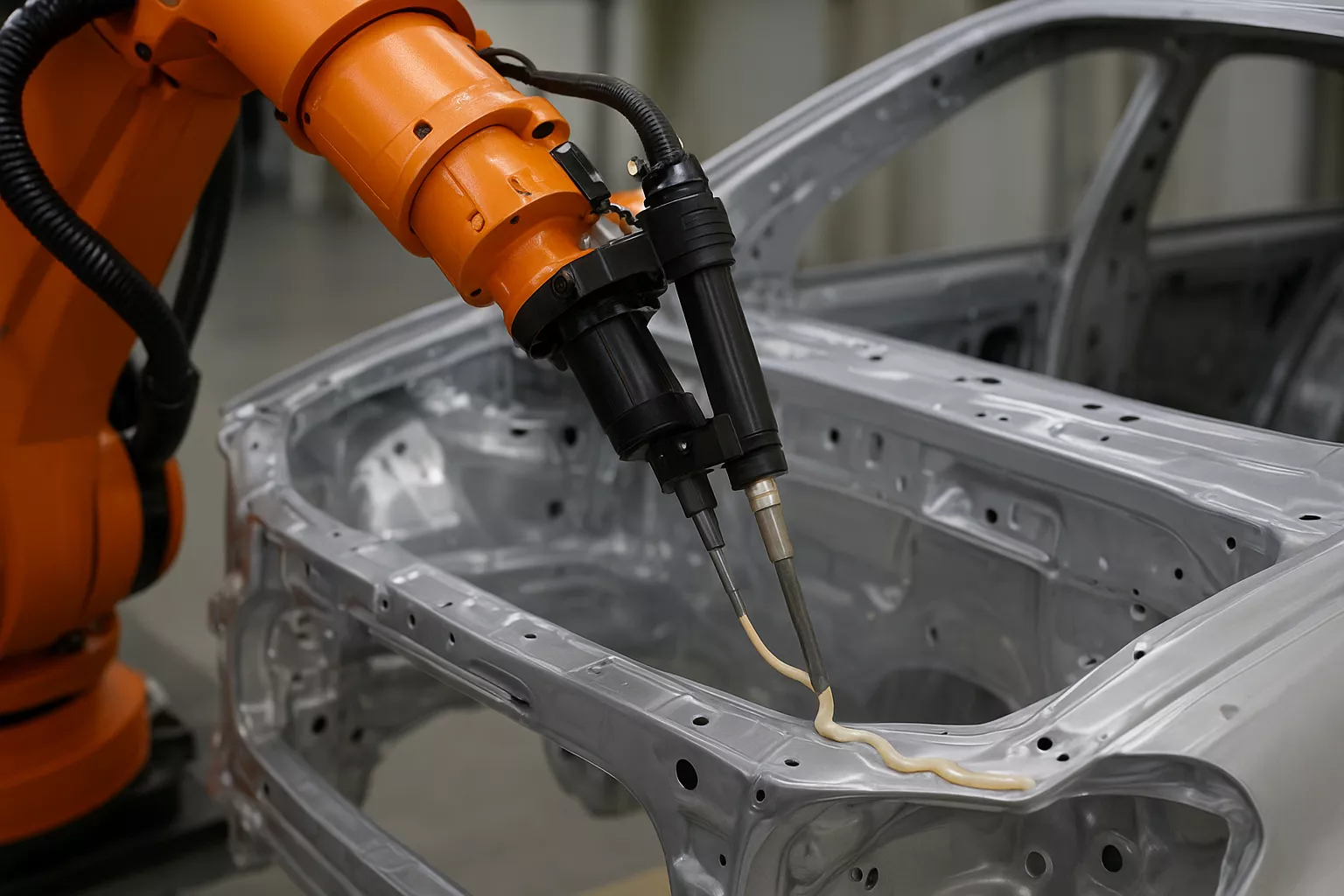
The Science of Metal Adhesion
Unlike mechanical fasteners, adhesives distribute stress evenly across the bond line, preventing fatigue and failure. Proper surface preparation is critical to remove contaminants and oxide layers, ensuring a robust chemical bond.
Surface Preparation
Critical techniques including degreasing, mechanical abrasion, and chemical etching to create an optimal surface for adhesion.
Corrosion & Oxide Layers
Strategies for managing native oxide layers on metals like aluminum and preventing galvanic corrosion when bonding dissimilar metals.
Structural Adhesives
Expertise in high-performance epoxies, structural acrylics, and polyurethanes that provide toughness, impact resistance, and durability.
Advantages Over Welding and Rivets
Adhesive bonding offers compelling advantages that enable lighter, stronger, and more durable product designs.
Weight Reduction
Eliminates the weight of rivets, bolts, and weld fillets, which is critical in aerospace and automotive applications for fuel efficiency.
Improved Aesthetics
Creates smooth, clean lines with no visible fasteners or heat distortion from welding, allowing for superior product finishes.
Uniform Stress Distribution
Spreads load across the entire bonded area, avoiding stress concentrations found at rivet holes that can lead to fatigue cracking.
Vibration Damping
The elastomeric properties of many adhesives absorb vibrations and impacts, resulting in quieter and more comfortable products.
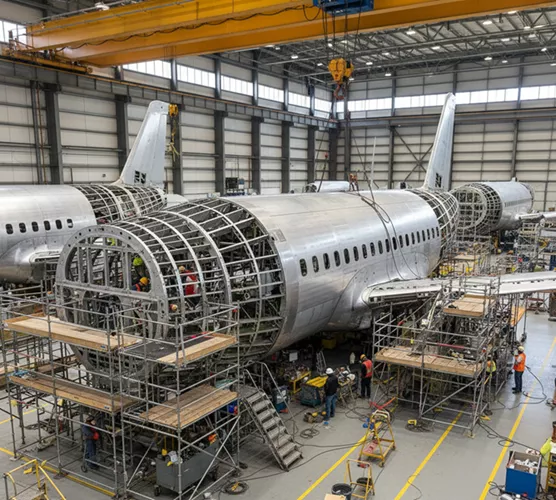
Driving Innovation in Key Industries
Our metal bonding solutions are at the heart of manufacturing advancements in the world's most demanding sectors. In aerospace, structural adhesives are used to bond fuselage panels, wing sections, and control surfaces, drastically reducing weight and improving fatigue life. The automotive industry relies on adhesives for "body-in-white" construction, attaching roof panels, and reinforcing chassis components to enhance crash safety and stiffness.
In architectural design, adhesives enable the creation of sleek curtain walls and cladding by bonding large metal panels without visible fasteners, pushing the boundaries of modern construction.
Failure Analysis and Prevention
Understanding why a bond fails is key to preventing it. By analyzing the failure mode, we can pinpoint weaknesses in the process and implement corrective actions for a more robust design.
Adhesive Failure
This occurs when the adhesive peels cleanly away from one of the substrates. It is almost always an indication of improper or inadequate surface preparation. The adhesive itself did not fail, but its ability to "wet out" and grip the surface did. Prevention focuses on rigorous cleaning, abrasion, and chemical treatments to ensure the surface is receptive to bonding.
Cohesive Failure
This is identified when the adhesive remains on both substrates after failure, meaning the adhesive itself broke apart. While this may seem like a weakness, it is often the preferred failure mode, as it proves that the surface preparation was successful and the bond to the substrate was stronger than the internal strength of the adhesive. Prevention involves selecting an adhesive with higher shear or tensile strength.
Optimizing for Strength: Joint Design
How a joint is designed is as important as the adhesive used. Adhesives perform best when stress is applied in shear, compression, or tension. They are weakest when subjected to peel or cleavage forces, which concentrate stress on the leading edge of the bond. A well-designed joint maximizes the bonded area and ensures forces are distributed favorably. For example, a simple butt joint is poor, but a lap joint or a scarf joint dramatically increases strength and durability by converting peel forces into shear forces.
Download Our Joint Design Guide